
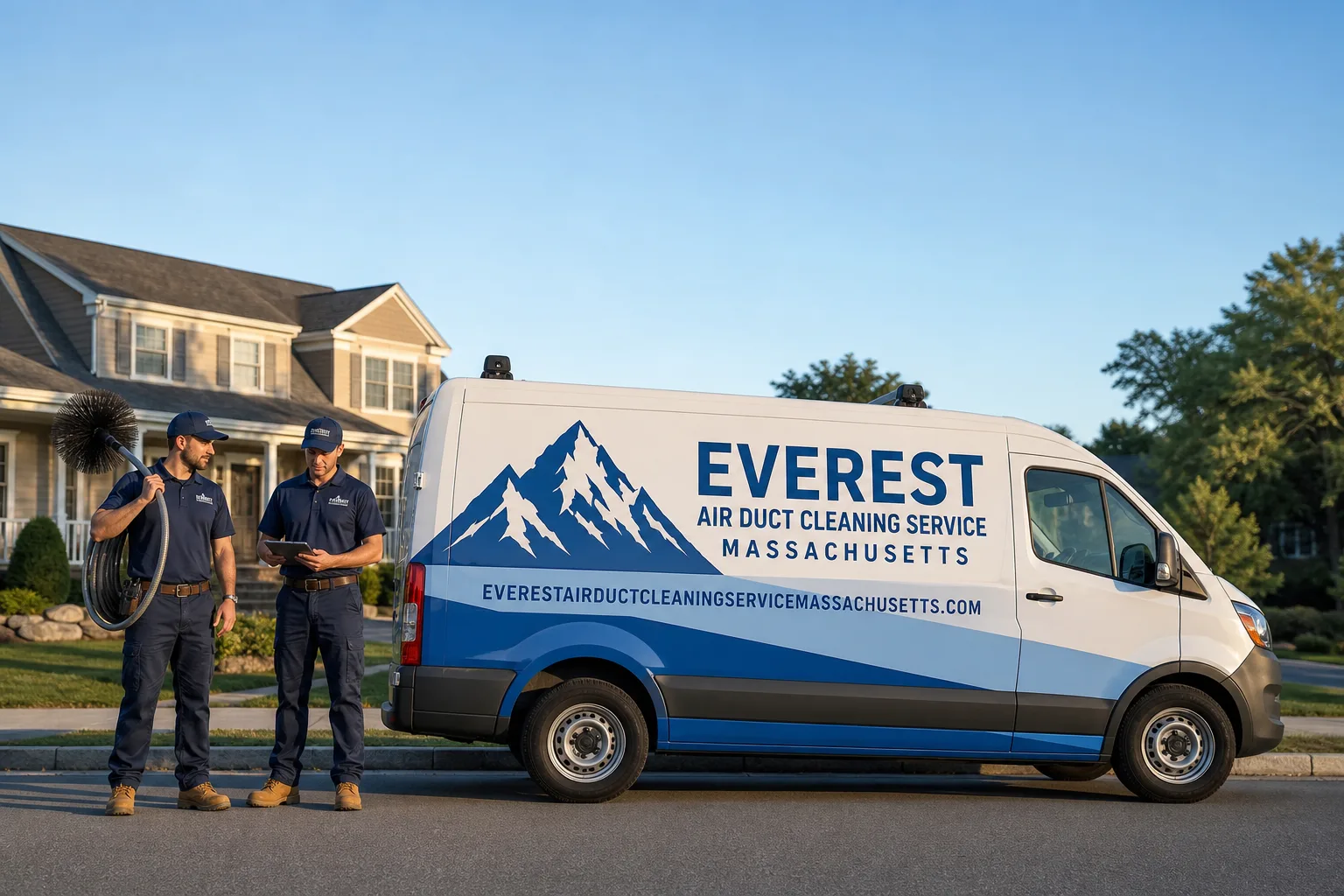
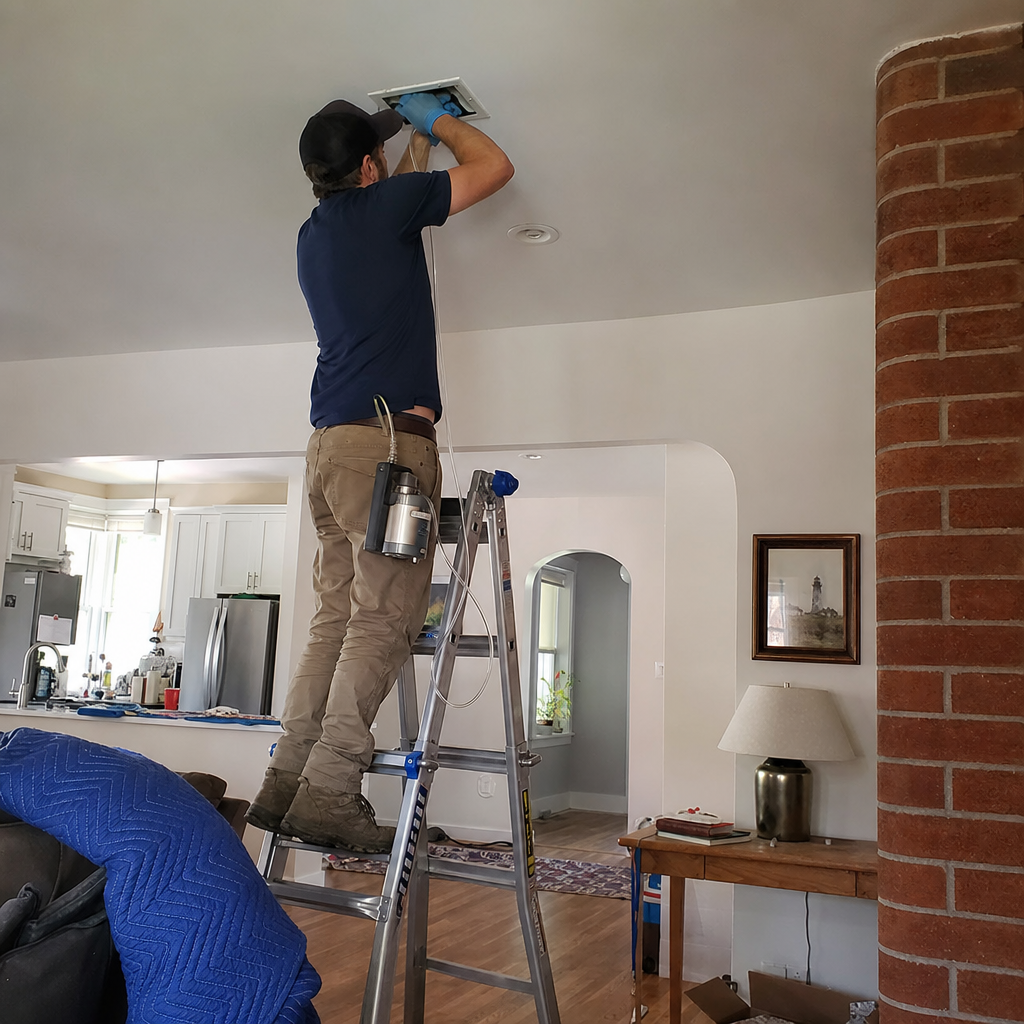
Fast, Reliable Air Quality & Sanitizing Across Boston
Air quality and sanitizing service in Boston typically runs $350–$850 for whole-home antimicrobial treatment, with mold-specific remediation in retrofitted ductwork starting at $500 and UV light installation averaging $400–$700 per unit. Most Boston jobs are completed same-day once access is established, though triple-decker retrofits often need extra time for panel cuts and whip navigation. Call (888) 597-5659 for a free estimate — Scott handles every job personally.
We’re based right here in Boston, and we’ve spent 11 years crawling through the ductwork that heats this city’s aging housing stock. From the triple-deckers packed into Dorchester and South Boston to the brick brownstones lining Beacon Hill, we’ve sanitized forced-air systems in buildings that were never designed for them. That local experience matters. A technician who knows Boston’s housing knows where mold hides, where asbestos might be lurking, and why standard equipment often fails in our market.
Our Air Quality & Sanitizing team works with the specific conditions Boston throws at duct systems: Atlantic humidity, decades of accumulated debris, and retrofit installations that ignore every best practice in the manual.
Why Everest Air Duct Cleaning Service Massachusetts Is Boston’s Preferred Air Quality & Sanitizing Company
617 customers have rated us 4.9 stars, and a significant share of those reviews come from Boston neighborhoods where homeowners had already tried franchise dispatchers or generalist HVAC companies. They call us after the mold returns, after the odor persists, after realizing the “sanitizing” they paid for was a spritz of consumer-grade product at the vents. Scott Gray answers the phone, runs the diagnostic, and handles the treatment himself — the same person start to finish, with 11 years focused on one thing.
We respond to Boston proper within hours, not days. That matters when you’re smelling must from basement ductwork in a Jamaica Plain triple-decker and the humidity’s been above 70 percent for a week. We also know the local regulatory landscape: Massachusetts asbestos abatement rules, Boston’s specific permitting for mechanical work in historic districts, and the material assessment protocols that protect both homeowner and technician in pre-1980 buildings.
Our equipment isn’t disguised consumer gear. We run Rotobrush brush-system technology, Nikro HEPA vacuums, and Abatement Technologies air scrubbers — the same tools commercial contractors use in hospitals and schools. For sanitizing, we work with Honeywell, Aprilaire, and Guardsman products, applied correctly rather than overdosed.
Our Air Quality & Sanitizing Services in Boston
Mold Treatment
Boston’s coastal New England climate drives an exceptionally long heating season — often October through late April — that keeps forced-air systems running under heavy load, pulling fine particulates and allergens through ducts far more intensively than in milder-climate markets. Atlantic humidity infiltrating older, poorly sealed building envelopes also creates the moisture conditions inside basement and crawl-space ductwork that support mold colonization, making post-cleaning antimicrobial treatment a harder sell to skip here than in drier inland cities. We treat active mold with EPA-registered antimicrobial agents applied through mechanical fogging, then address the moisture source so it doesn’t return. In Boston basement systems, that often means identifying envelope leaks that duct-only companies miss.

Bacteria Sanitizing
Bacteria buildup in Boston ducts follows a seasonal pattern: summer humidity spikes colonize the biofilm layer that winter heating has baked onto duct walls, creating a cycle of microbial growth that standard cleaning alone won’t break. We apply targeted sanitizing agents after mechanical agitation removes the physical debris they’re feeding on. For homes with allergy sufferers, pets, or recent renovations in neighborhoods like South Boston or East Boston, this two-step process is what actually changes what you’re breathing.

Odor Removal
Odor removal in Boston rowhouses presents unique challenges. Shared walls, minimal ventilation pathways, and ductwork that connects multiple floors mean smells migrate in ways they wouldn’t in suburban ranch homes. We’ve eliminated persistent musty odors in Dorchester triple-deckers where the source was mold growth in inaccessible sheet-metal elbows, and we’ve traced cooking smells migrating between units through compromised duct seams in Back Bay brownstones. Our process identifies the actual source — never just masks it — and treats with oxidizing agents that break down odor molecules rather than covering them.

UV Light Installation
UV-C light installations in Boston are most effective in basement-mounted air handlers and crawl-space returns — the exact locations where our coastal humidity drives mold growth. We install Honeywell and Aprilaire UV systems sized to the specific CFM of your handler, positioned for direct line-of-sight to the coil and drain pan where microbial colonies establish. For triple-decker units with handlers crammed into former coal bins or closet conversions, we spec low-profile units that fit where standard housings won’t.

What happens when you call
- 1
A real person answersNo phone trees — you reach a local pro.
- 2
You get an upfront price rangeHonest numbers before anyone is dispatched.
- 3
A background-checked tech heads outLicensed & insured, dispatched right away.
- 4
You approve before work beginsNothing starts until you say go.
Trusted Brands We Service in Boston
We stock and install Honeywell, Aprilaire, and Guardsman filtration and sanitizing products for Boston customers, with fast turnaround on replacement UV bulbs, media filters, and antimicrobial treatments. These aren’t afterthought add-ons — they’re integrated into our service workflow because we’ve seen what works in this market over 11 years. When a Dorchester homeowner needs a UV bulb swapped in February because their basement handler’s been running nonstop since October, we carry the inventory to do it that visit, not next week.
Common Air Quality & Sanitizing Problems We See in Boston Homes
- Mold colonization in basement ductwork driven by Atlantic humidity and poor envelope sealing during the long heating season. Boston’s heating systems run 6–7 months annually, pulling humid basement air through returns and depositing moisture on cool duct surfaces. We see this pattern repeat in Cambridgeport, Somerville-adjacent Boston neighborhoods, and anywhere with stone foundations and minimal modern air sealing.
- Asbestos-containing duct wrap from pre-1980 HVAC retrofits triggering state regulations and delaying mechanical cleaning. Pre-1980 HVAC retrofits in Boston’s Victorian housing stock frequently used asbestos-containing duct insulation wrap. Our technicians assess materials before any mechanical agitation to avoid triggering Massachusetts asbestos abatement regulations — a step franchise crews often skip until it’s too late.
- Debris accumulation accelerated in tortuous retrofitted runs that standard brush rigs cannot navigate, requiring specialized whip equipment. In triple-deckers where the original coal or oil boiler was swapped for a forced-air system, supply runs are often routed vertically through shared inter-unit wall chases only four to six inches wide. Standard rotary-brush rigs physically cannot navigate the offsets.
- Persistent odors migrating through compromised duct seams in multi-unit buildings with shared mechanical spaces. Boston’s density means your air quality problem might originate two floors down or through a wall chase connecting three units. We trace these pathways rather than treating symptoms.
Pricing for Air Quality & Sanitizing in Boston, MA
| Service | Typical Range in Boston |
|---|---|
| Whole-home antimicrobial sanitizing (standard duct system) | $350–$550 |
| Mold treatment in accessible ductwork | $500–$850 |
| Mold treatment with triple-decker access panels / whip navigation | $650–$1,100 |
| UV light installation (single unit) | $400–$700 |
| Odor removal treatment (source-identified, localized) | $300–$600 |
| Combination sanitizing + sealing package | $800–$1,400 |
What moves you within these ranges: system size, accessibility (triple-decker retrofits take longer), severity of contamination, and whether we need to cut access panels or navigate whip equipment through narrow chases. We don’t quote over the phone for mold jobs — Scott inspects in person, identifies the source, and gives you a fixed price before starting. Estimates are free. Call (888) 597-5659.
We Also Serve Cities Near Boston
We regularly cross into South Boston for triple-decker sanitizing jobs, handle Chelsea’s mixed industrial-residential conversions, service Winthrop’s coastal humidity challenges, and work Cambridge’s pre-war housing stock with similar retrofit duct issues. Each market has its own character, but the core problems — humidity, age, retrofitted systems — follow patterns we know well.
Serving Boston, MA — Our Local Coverage Area
We’re based in the Boston area and know this community well. Use the map below to see our service coverage — if you’re nearby, we can almost certainly help.
FAQs — Air Quality & Sanitizing in Boston
Standard rotary-brush systems physically cannot navigate the 4-6 inch wall chases and tight offsets common in retrofitted triple-decker ductwork. We deploy extended Nikro skipping-whip equipment and often cut access panels on-site to reach contaminated elbows that would otherwise go untreated. If you live in a Dorchester, Jamaica Plain, or Roxbury triple-decker, ask specifically about whip-based methods when you call — not every company carries this gear.
Boston’s Atlantic humidity creates basement and crawl-space moisture conditions that support mold colonization far more aggressively than in drier inland climates, especially during the long heating season when systems run continuously and poorly sealed envelopes draw in damp air. We see active mold in basement returns on roughly 40 percent of pre-1990 Boston jobs we inspect. Call (888) 597-5659 for a free inspection if you smell must when your heat kicks on.
Pre-1980 HVAC retrofits in Boston frequently used asbestos-containing duct insulation wrap, so yes — material assessment is essential before any mechanical agitation that could release fibers. Our technicians are trained to identify suspect materials and halt work if asbestos is present, following Massachusetts abatement regulations. We never proceed with brushing or whip agitation until we’ve ruled it out visually.
Shared walls, vertical duct chases connecting multiple floors, and minimal ventilation pathways allow odors to migrate between units and levels in ways that don’t occur in detached homes. We’ve traced persistent smells to compromised duct seams two floors below the complaining unit, requiring sealing as part of the odor solution. Source identification takes longer in these buildings, but it’s the only approach that actually works.
Yes — UV-C light positioned at the coil and drain pan is specifically effective against the mold species that colonize Boston’s humid basement air handlers, provided the unit is sized correctly and the bulb is replaced annually. We install low-profile Honeywell and Aprilaire units designed for tight mechanical spaces common in Boston retrofits. Call (888) 597-5659 and Scott will assess your handler configuration for UV suitability during the same visit.
Written by Scott Gray, Owner at Everest Air Duct Cleaning Service Massachusetts, serving Boston since 2014.