
Emergency Air Duct Cleaning Near Me: What Boston Homeowners Should Do First
Emergency air duct cleaning in Boston should almost never start with cleaning. If you’ve had a house fire, sewage backup, or found visible mold in your ductwork, calling for same-day duct vacuuming before proper remediation will redistribute contaminants through every room. The correct first step is always system shutdown, documentation, and triage — then targeted cleaning as the final phase. If you’re dealing with a true duct emergency right now and need guidance, call us at (888) 597-5659 and we’ll walk you through what to do before anyone touches your system.
The Three Actual Duct Emergencies (And What “Emergency” Really Means)
Most Boston homeowners searching “emergency air duct cleaning near me” are reacting to one of three situations. Only two of them are genuine emergencies requiring same-day action. The third is urgent but manageable within 24–48 hours with the right sequence.
Same-day emergency: Active fire or smoke damage with HVAC running, or sewage contamination where waste has entered the return ducts. Both pose immediate health risks and will spread with every cycle of your system.
Urgent but not same-day: Visible mold growth inside ductwork. This demands quick response — mold releases spores continuously — but a 24-hour pause to get proper air quality testing will yield far better outcomes than rushed cleaning. We’ve seen homeowners in Dorchester and Roslindale spend thousands on “emergency” duct cleaning that only aerosolized active mold because no pre-test was done.
Perceived emergency: Heavy dust after renovation, allergy flare-ups, or musty odors. These feel urgent, especially with kids or elderly family members, but they’re not dangerous in the immediate sense. Proper scheduling with a specialist beats panic-booking a franchise dispatch crew.
The key distinction: if the contaminant is actively circulating through your living space right now, that’s an emergency. If it’s localized and your system can stay off, you have time to do this correctly.
Fire Restoration and Ductwork: The Sequence Boston Homes Need
Boston’s older housing stock — triple-deckers in Jamaica Plain, Victorians in Roxbury, colonials in West Roxbury — compounds fire damage because aging ductwork acts like a smoke sponge. Here’s the sequence we follow when Scott gets called to fire restoration projects, and the one any homeowner should insist on:
- HVAC shutdown immediately. Do not run the system “to see if it’s bad.” Every cycle drives particulate deeper into fiberglass duct lining and across rooms that weren’t directly fire-damaged.
- Smoke damage assessment by a restoration contractor. They evaluate structural damage, insulation, and whether ducts need replacement versus cleaning. We coordinate directly with restoration teams — Scott’s handled this handoff on dozens of Boston jobs.
- Source removal and sealing. Charred materials, water-damaged insulation, and compromised flex duct get removed first. Cleaning smoke from intact metal ductwork only makes sense after the destroyed sections are gone.
- Mechanical cleaning with HEPA containment. This is where our Nikro HEPA vacuums and Rotobrush systems come in — but only after steps 1–3. We also deploy Abatement Technologies air scrubbers during the process to capture what agitation releases.
Skip the assessment and go straight to cleaning, and you’ll pay twice: once for the inadequate cleaning, once for the proper remediation after the smoke smell returns in six weeks. We’ve seen this exact scenario in a South End condo where the homeowner’s insurance initially denied the second round because “cleaning had already been done.”
Mold in Your Ducts: Shut It Down, Document, Test — Then Clean
Visible mold inside ductwork triggers panic, and mold remediation companies know it. But the most expensive mistake you can make is authorizing duct cleaning without knowing what species you’re dealing with and how far it’s spread.
Here’s what we tell Boston homeowners who call us about suspected mold:
- Shut down the HVAC system completely. Don’t switch to “fan only” — that still circulates air through contaminated pathways.
- Photograph everything visible. Cell phone photos through register openings, flash on. Date-stamped documentation protects you with insurance and helps any contractor scope the job accurately.
- Get air quality testing from an independent inspector. Not from the company that will also do the cleaning — that’s a conflict. Look for Massachusetts-certified indoor air quality professionals who’ll sample before and after. In Boston, labs can typically turn around speciation results in 48 hours.
- Address the moisture source. Mold returns unless humidity is controlled. We frequently install Aprilaire whole-home dehumidifiers in Boston basements where seasonal moisture drives recurrence.
- Clean only after remediation scope is set. Sometimes ducts need replacement, not cleaning. Sometimes the mold is surface-only and mechanical cleaning with Guardsman sanitizing treatment is sufficient. The test determines which.
We turned down a same-day mold cleaning job in Allston last month because the homeowner hadn’t tested yet. They called back two weeks later after results showed it was Cladosporium — manageable with targeted cleaning — and we handled it properly. The franchise that would have “emergency” cleaned the day of the call would have charged $1,400 for work that didn’t address the actual problem.
How to Vet an “Emergency” Duct Cleaning Contractor
Legitimate emergency response in this trade looks different than most homeowners expect. Here’s what Scott actually does when someone calls (888) 597-5659 with an urgent situation — and what you should demand from any contractor:
A real operator asks triage questions before booking. We want to know: Is your system running right now? What type of contamination — fire, water, mold, sewage? When did it start? Have other contractors been involved? If someone just asks for your address and credit card, they’re not assessing — they’re dispatching.
Owner accountability matters in emergencies. When Scott handles every job personally, the person making decisions on-site is the same one who answered your call. There’s no game of telephone between a call center, a dispatcher, and a rotating crew who’ve never seen your system. In 11 years of focused duct and dryer vent work, that direct line has prevented more bad outcomes than any equipment spec.
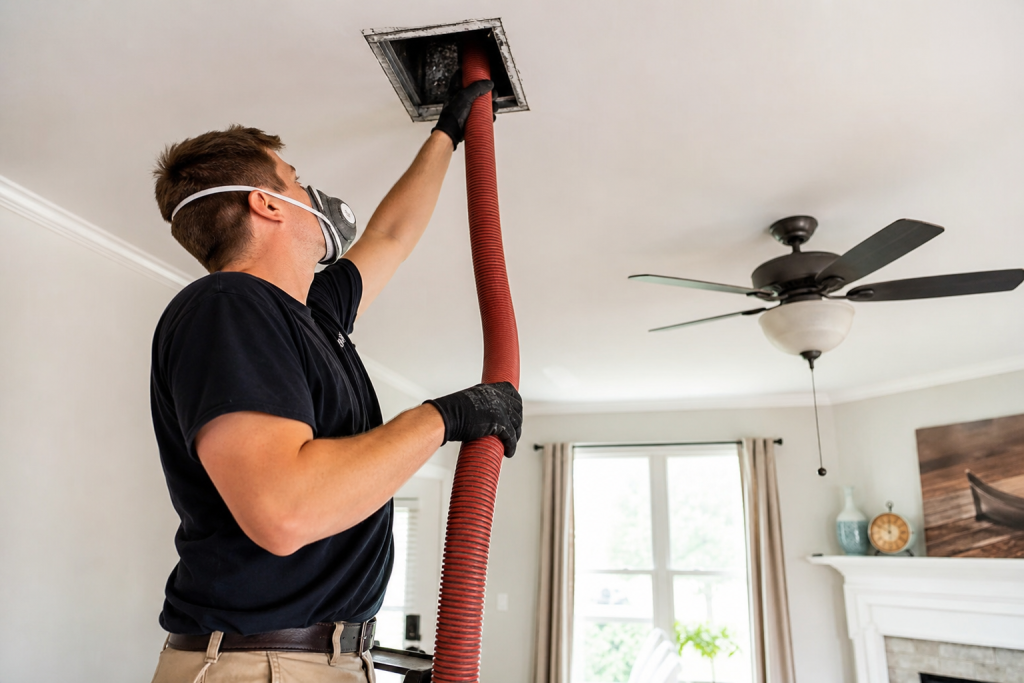
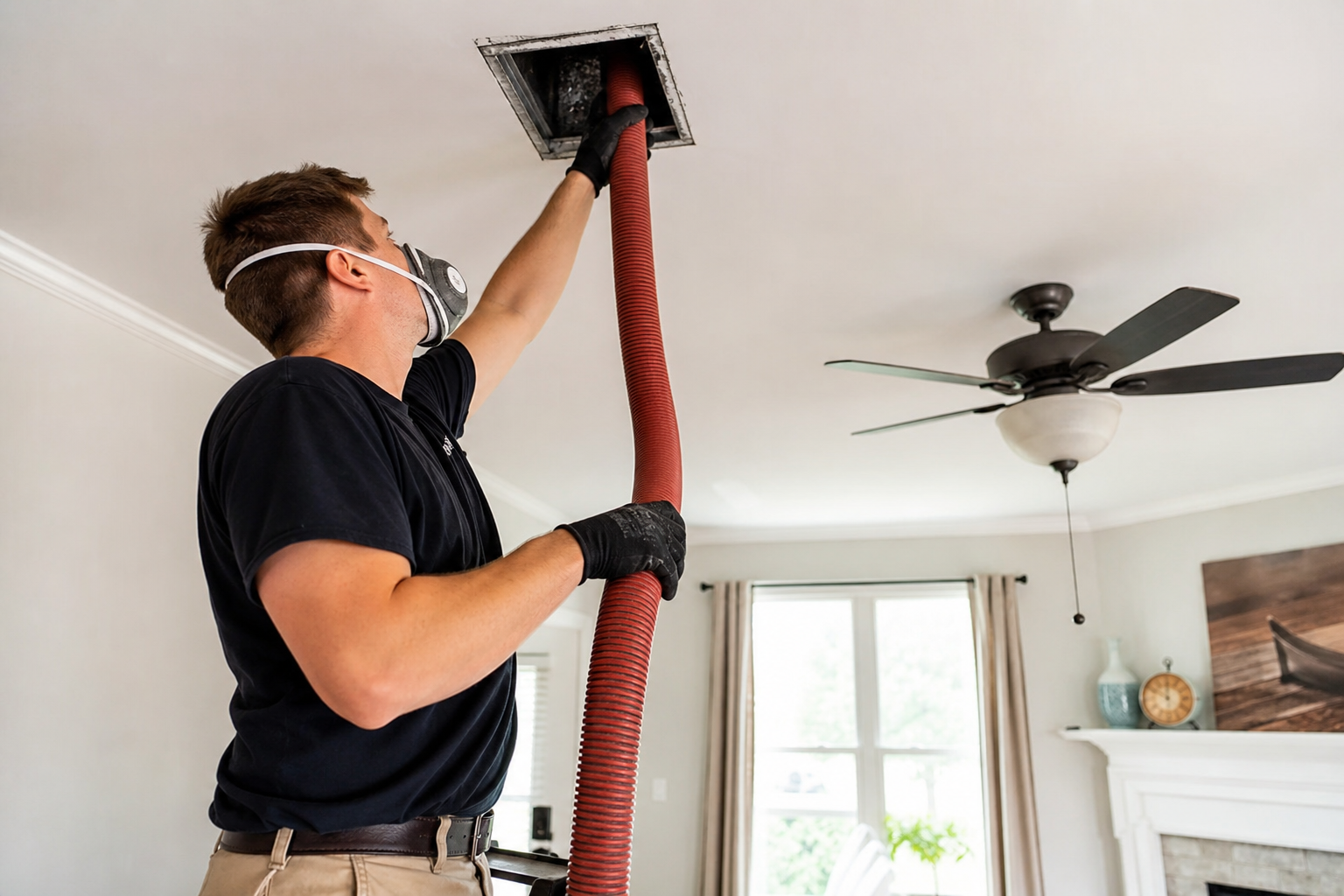
Equipment specificity signals competence. Ask what they’ll actually use. “Industrial vacuum” means nothing. “Rotobrush brush-system with HEPA filtration and negative air containment” means something. We name our tools because they’re relevant — Nikro for vacuum power, Abatement Technologies for air scrubbing during active remediation.
Honesty about timeline beats false urgency. As an owner-operated business, we can’t always be on-site in two hours. What we can promise is accurate triage over the phone, honest timeline communication, and showing up prepared with the right equipment for your actual situation. Franchise networks with 20 vans can dispatch faster — but you’re rolling dice on which technician arrives and whether they’ve handled your specific emergency before.
What You Can Safely Check Yourself (And What Requires a Pro)
There are two things any Boston homeowner can do safely before calling, and one that absolutely requires professional equipment:
Safe to check: Register and return grille removal for visual inspection. A flashlight and phone camera will show obvious mold, standing water, or debris blockages. Note the color, texture, and location of anything unusual. If you see ash or soot residue after a fire, that’s confirmation — but don’t attempt to vacuum it yourself with a household machine, which lacks HEPA filtration and will redistribute fine particulate.
Safe to check: Thermostat and breaker shutoff. Killing power to the HVAC system is always the right first move for contamination events. No special knowledge needed.
Never DIY: Internal duct inspection beyond arm’s reach, or any cleaning involving agitation inside the system. Without proper negative air containment, you’re turning your ductwork into a distribution network for whatever you’re trying to remove. We use sealed HEPA vacuums with external exhaust for exactly this reason — your Shop-Vac doesn’t.
When to call a pro: If you’ve had fire, water, or sewage contact with your system; if you see visible mold; if anyone in your home has respiratory symptoms that worsen when HVAC runs. For standard maintenance and non-emergency cleaning, Everest Air Duct Cleaning Service Massachusetts home has scheduling options that don’t require the emergency premium.
Related Services in Boston
Depending on what triggered your search, you may need more than duct cleaning. We handle the full scope — Air Duct Cleaning in Worcester and surrounding areas, Dryer Vent Cleaning in Worcester for fire prevention, and HVAC Cleaning in Worcester for system-wide contamination. In Boston proper, we clean it, repair it, and seal it — duct repair and sealing is often the missing piece after emergency cleaning, especially in older homes where decades of vibration have loosened connections.
What happens when you call
- 1
A real person answersNo phone trees — you reach a local pro.
- 2
You get an upfront price rangeHonest numbers before anyone is dispatched.
- 3
A background-checked tech heads outLicensed & insured, dispatched right away.
- 4
You approve before work beginsNothing starts until you say go.
The Bottom Line
True duct emergencies in Boston demand shutdown first, assessment second, and cleaning last — not the reverse. The “emergency air duct cleaning near me” results that promise same-day dispatch without triage questions are often selling speed over correctness. In 11 years of focused work, we’ve learned that the 20-minute phone call that properly scopes your situation saves more money and health risk than any rushed arrival.
Key takeaways:
- Fire, sewage, and active mold circulation are same-day emergencies; visible mold without active spread is urgent but testable within 24–48 hours
- Never run your HVAC during or after contamination events — shutdown is always step one
- Get independent air quality testing before authorizing mold-related duct cleaning
- Vet contractors by their triage questions, not just their response speed
- Owner-operated accountability means the expert assessing your situation is the same person doing the work
If you’re in Boston and facing a duct-related emergency — or you’re not sure whether your situation qualifies — call (888) 597-5659. Scott will walk you through what to do right now, whether we can help today or you need a different specialist first. Estimates are free, and we’d rather point you toward the right solution than book the wrong job.
Frequently Asked Questions
Emergency duct cleaning in Boston typically runs $400–$900 for residential systems, with fire restoration and mold remediation jobs ranging $800–$2,500 depending on contamination extent, duct accessibility, and whether repair or sealing is needed afterward. True emergencies requiring same-day response may carry a modest premium over scheduled service. Call (888) 597-5659 for an exact quote — estimates are free, and we’ll tell you honestly whether your situation needs immediate service or can be properly scheduled.
No — fan mode still circulates air through contaminated ductwork and distributes spores throughout your home. Shut the system down completely until you’ve had air quality testing and a professional assessment. We’ve seen homeowners in Boston’s humid summer months make this mistake and spread localized mold problems into every room. The cost of proper remediation multiplies significantly once that happens.
Partial replacement of damaged sections is usually more cost-effective than full duct replacement, but only after a restoration contractor has assessed structural integrity. In Boston’s older homes with galvanized steel or asbestos-wrapped ducts, replacement of compromised runs often pairs with modern sealing for better long-term performance. We evaluate this on every fire restoration job — sometimes cleaning saves the ductwork, sometimes replacement is the only safe option, and the difference isn’t guesswork.
As an owner-operated business, Scott handles every job personally — which means honest timeline communication rather than dispatch-center promises. Same-day response is often possible for confirmed emergencies, but our first priority is accurate phone triage to confirm you actually need same-day service versus proper sequencing over 24–48 hours. In 11 years, we’ve found that the 15-minute assessment call prevents more problems than any two-hour rush arrival. Call (888) 597-5659 and we’ll tell you exactly what your situation requires.
Written by Scott Gray, Owner & Lead Technician at Everest Air Duct Cleaning Service Massachusetts, serving Boston since 2015.
Need Air Duct Cleaning Help?
Call Everest Air Duct Cleaning Service Massachusetts — licensed & insured, here with fast after-hours help in Massachusetts.
(888) 597-5659