
Nikro Air Duct Cleaning in Boston: A Homeowner’s Guide
Nikro air duct cleaning equipment is a professional-grade negative pressure vacuum system with HEPA filtration and agitation tools designed for residential and commercial ductwork. In Boston, where older homes with complex duct layouts are common, the same Nikro unit can deliver excellent or mediocre results depending entirely on the technician’s setup, CFM settings, and access point strategy. If you’re researching equipment before hiring a contractor, call (888) 597-5659 for a free estimate — Scott handles every job personally and can walk you through exactly how he’d approach your home.
What Nikro Equipment Actually Does
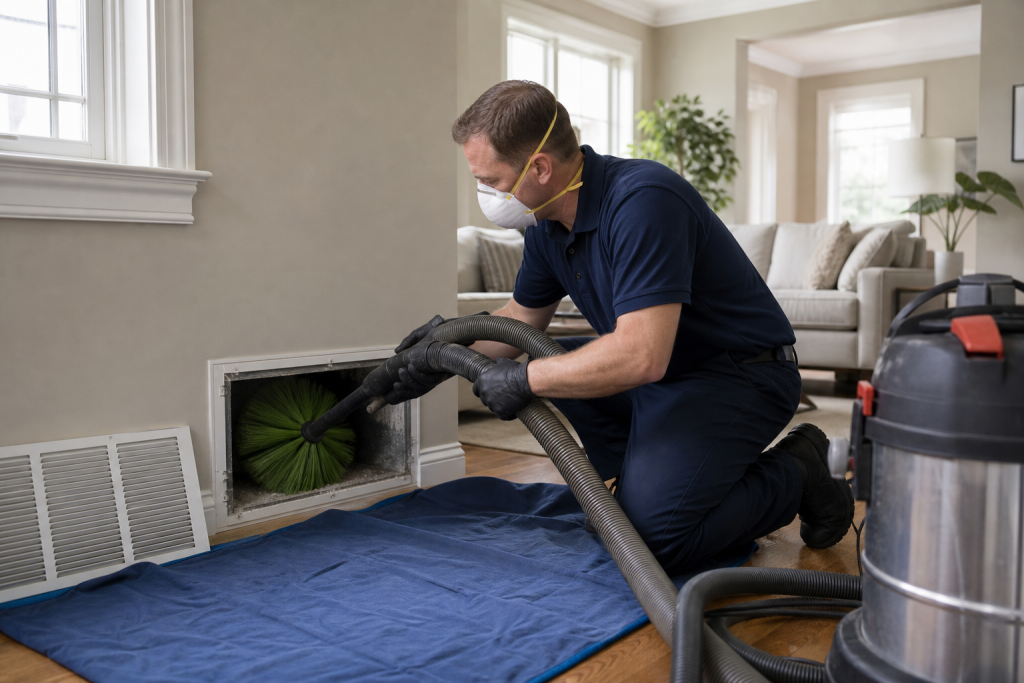
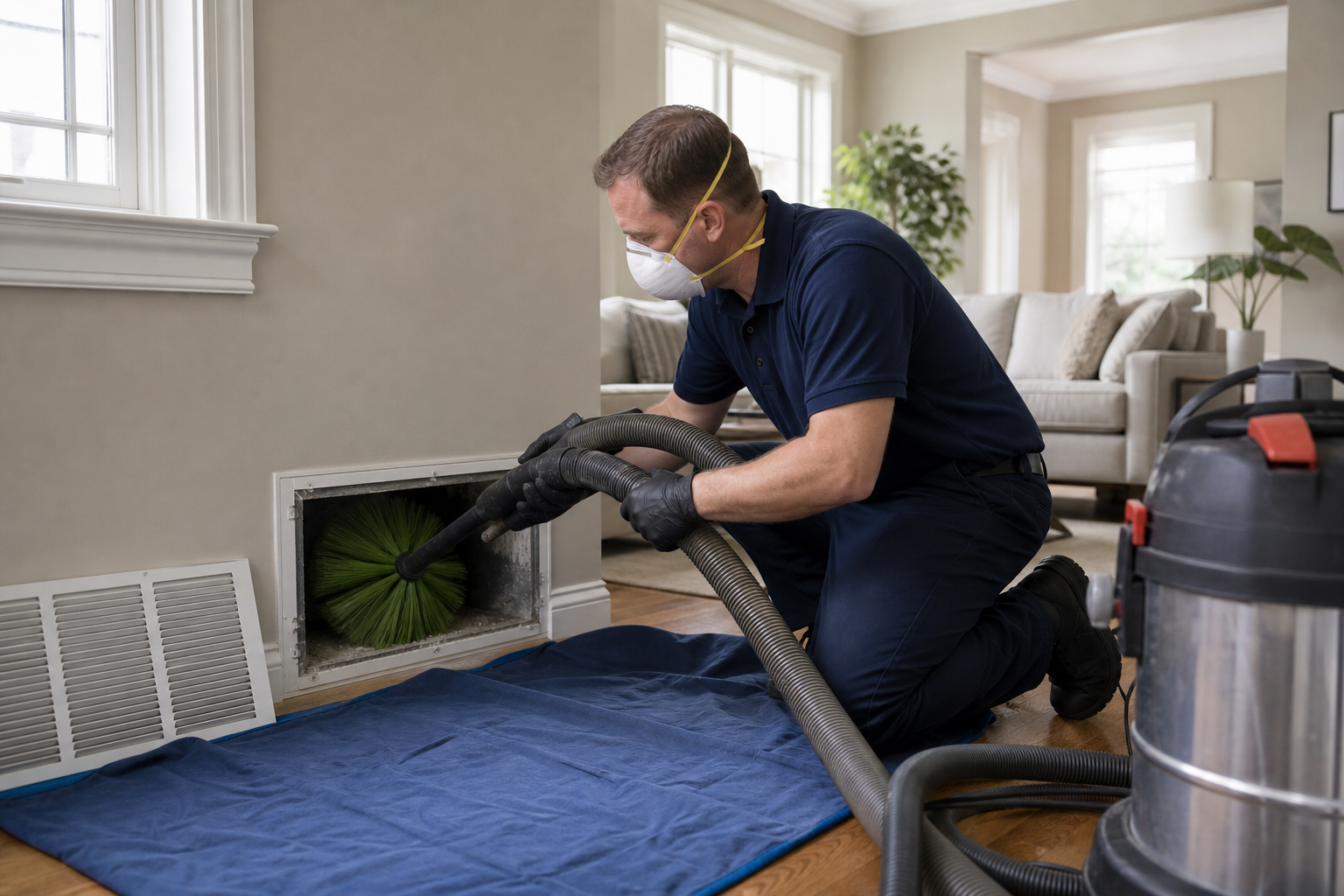
Nikro manufactures negative pressure vacuum systems, portable HEPA collectors, and rotary brush agitation tools used in professional air duct cleaning. The core idea is straightforward: a powerful vacuum creates suction at a sealed access point, while brushes or air whips dislodge debris from duct walls so it gets pulled out rather than pushed deeper into your system.
Here’s what the equipment handles well:
- Negative pressure containment: The vacuum maintains suction that prevents debris from escaping into living spaces during cleaning
- HEPA filtration on exhaust: Captures particles down to 0.3 microns, which matters in Boston homes with fine dust from old plaster, road salt, and pollen
- Agitation compatibility: Nikro vacuums pair with rotary brushes, air whips, and skipper balls to break loose adhered buildup
- Portable configuration: Units like the Nikro HP20 or HP500 roll through standard doorways and operate on household power
What Nikro equipment doesn’t do is automatic. The machine has dials, settings, and hose configurations that require decisions at every job. We’ve seen operators run a Nikro at half the CFM it needs for a main trunk line because they didn’t want to drag a second hose, or skip HEPA pre-filters to save on consumables. The tool is capable; the result depends on who’s running it.
Why the Same Machine Produces Different Results
Boston presents specific challenges that separate skilled operators from equipment owners. The housing stock here — triple-deckers in Dorchester, Victorians in Roxbury, mid-century ranches in West Roxbury — has ductwork installed across decades with inconsistent access, mixed materials, and often no original design drawings.
Three technical decisions determine whether a Nikro cleaning actually works:
- CFM and static pressure matching: A long flex duct run to a third-floor bedroom in Jamaica Plain needs different suction than a short metal trunk in a South End brownstone. We adjust the Nikro’s variable speed and port configuration for each zone rather than running one setting house-wide.
- Access point staging: Every access cut is a penetration that needs sealing afterward. Poor operators make too few cuts and leave debris behind, or too many and weaken the duct structure. In 11 years, we’ve developed a staging pattern that hits every branch with minimum penetrations — typically 3-5 strategic points in a standard Boston single-family.
- Agitation sequence: Running a rotary brush through a duct with existing mold or moisture can spread spores or damage flex liner. We inspect first, then choose the right agitation tool for the material condition.
We pulled a job in Roslindale last month where a previous cleaner had run a Nikro-branded rotary brush through a fiberglass-lined return, shredding the liner and leaving fiberglass fragments circulating through the house. The machine was legitimate; the technique wasn’t appropriate for that duct type.
Questions to Ask Any Contractor Claiming Nikro Equipment
Because Nikro sells to anyone with a credit card — and there’s a robust used equipment market — the brand name on the van doesn’t guarantee competence. Here’s what separates actual specialists from equipment renters:
- “How long have you operated this specific unit?” A technician with 500+ hours on a Nikro HP500 knows its airflow curves, filter loading behavior, and hose routing tricks. Someone who bought a used unit last month is still learning.
- “Do you own or rent the equipment?” Renters have less incentive to maintain HEPA filters, seals, and brush heads properly. We own our Nikro and Rotobrush systems outright and track maintenance cycles.
- “What’s your access point methodology?” Vague answers or “we’ll figure it out on site” suggest poor planning. A competent technician can describe where they’ll cut, how they’ll seal, and why those locations were chosen.
- “What CFM range do you target for main trunk vs. branch lines?” If they can’t answer this, they’re not adjusting the machine — they’re just turning it on.
In Boston’s competitive market, we’ve encountered crews who show up with a Nikro vacuum and a shop vac hose adapter, essentially using professional equipment for amateur methodology. The homeowner pays for “professional cleaning” and gets surface-level results.
How We Use Nikro Equipment in Boston-Area Homes
Scott handles every job personally, and our Nikro setup reflects 11 years of refinement for local conditions. Here’s what a typical Boston-area cleaning looks like:
We start with a visual inspection of the full duct system — supply and return, trunk and branches — using access panels and camera where needed. In Back Bay brownstones, that often means finding original access points buried behind renovations. In Somerville triple-deckers, it means identifying where prior HVAC modifications created dead legs with no airflow.
The Nikro HP500 gets positioned centrally with HEPA pre-filter and final filter both verified clean. We stage 2-inch and 4-inch hose runs based on duct diameter, never forcing a single hose through complex bends where it’ll lose suction. Agitation runs rotary brushes for rigid metal duct, air whips for flex, and skipper balls for long horizontal runs where brush contact is inconsistent.
Post-cleaning, we verify airflow at each register with an anemometer — not because it’s required, but because it’s the only way to confirm the duct is actually open, not just cleaner. We’ve found collapsed flex, disconnected boots, and blocked dampers this way that no amount of vacuuming would have fixed.
When we find those issues, we don’t just note them and leave. Our Everest Air Duct Cleaning Service Massachusetts home service includes duct repair and sealing because cleaning a leaky or damaged system is temporary improvement at best.
What Nikro Equipment Cannot Fix
This is where we part company with contractors who sell cleaning as a cure-all. Nikro vacuums are excellent at removing loose particulate and light adhered debris from accessible ductwork. They cannot:
- Seal duct leakage: If your supply trunk has a 15% leakage rate to the attic, the cleanest duct in the world is still heating your insulation. We measure leakage and seal with mastic or mechanical fasteners before cleaning when the budget allows.
- Remove active mold growth: HEPA vacuuming captures spores but doesn’t kill the source. Our Air Quality & Sanitizing service uses Guardsman and other treatment protocols for biological contamination, applied after mechanical cleaning.
- Repair collapsed or damaged duct: Crushed flex duct, disconnected boots, or rusted metal need physical repair. We’ve replaced entire flex runs in Boston attics where the original installer used 25-year-old material that’s now brittle.
- Compensate for missing filtration: A Nikro cleaning removes what’s already in your ducts. If you’re running a 1-inch fiberglass throwaway filter, the debris returns. We specify Honeywell and Aprilaire filtration upgrades when the homeowner wants sustained improvement.
The honest conversation — the one we have with Boston homeowners regularly — is sometimes “cleaning helps, but repair comes first.” We’d rather turn down a cleaning job than take money for temporary improvement when the duct itself needs fixing.
When to Call a Pro
If you’ve read this far, you’re already doing more research than most homeowners. Here’s when professional assessment makes sense: visible dust emission from registers, uneven heating/cooling between rooms, musty odors when the system runs, or recent renovation dust that likely entered the ductwork. In Boston’s older housing stock, we also recommend inspection before major HVAC upgrades — new equipment connected to dirty or leaky ducts underperforms immediately.
Related services in Boston: We also provide Air Duct Cleaning in Worcester, Dryer Vent Cleaning in Worcester, and HVAC Cleaning in Worcester for homeowners in the broader metro area.
Key Takeaways
- Nikro manufactures capable professional equipment, but the operator’s skill determines results
- Boston’s varied housing stock requires customized CFM, access point, and agitation decisions
- Ask contractors about equipment ownership duration, access methodology, and technical specifics
- Cleaning cannot fix duct leakage, mold sources, or physical damage — repair may come first
- Verify results with airflow measurement, not just visual inspection
The Bottom Line
Nikro equipment is worth seeking out, but it’s one variable in a technical service that depends heavily on who’s running it. In 11 years of focused ductwork, we’ve learned that the machine gets you in the door — the technician’s decisions about access, airflow, and sequencing determine whether you actually breathe cleaner air afterward.
If you’re in Boston and want an owner-technician who’ll explain the setup before starting work, Everest Air Duct Cleaning Service Massachusetts offers free estimates. Scott handles every job personally. Call (888) 597-5659 to schedule.
Frequently Asked Questions
Professional air duct cleaning with Nikro or equivalent equipment in Boston typically ranges from $400–$800 for a standard single-family home, depending on system size, accessibility, and contamination level. Larger homes, rodent infestations, or extensive mold remediation push costs higher. Call (888) 597-5659 for an exact quote — estimates are free.
They’re different tools for different applications. Nikro excels at high-CFM negative pressure vacuum collection, while Rotobrush specializes in contact agitation with integrated vacuum. We own and use both — Nikro for main trunk lines and heavy debris loads, Rotobrush for branch lines and delicate flex duct. The “better” question depends on your specific duct configuration, which is why we inspect before choosing equipment.
Ask technical specifics: what CFM they target for your duct diameter, how many access points they plan, and whether they verify airflow post-cleaning. Vague answers or reluctance to explain suggest limited operational experience. We welcome these questions — 11 years of running this equipment means we can walk you through the decision tree before we start.
Every 3–5 years for typical households, sooner if you have pets, allergy sufferers, or recent renovations. Boston’s older homes with original ductwork, plus our seasonal pollen and road salt dust, often benefit from closer to 3-year intervals. We assess each home individually rather than selling fixed schedules — call (888) 597-5659 and we’ll give you an honest recommendation based on your system condition.
Written by Scott Gray, Owner & Lead Technician at Everest Air Duct Cleaning Service Massachusetts, serving Boston since 2015.
Need Air Duct Cleaning Help?
Call Everest Air Duct Cleaning Service Massachusetts — licensed & insured, here with fast after-hours help in Massachusetts.
(888) 597-5659